
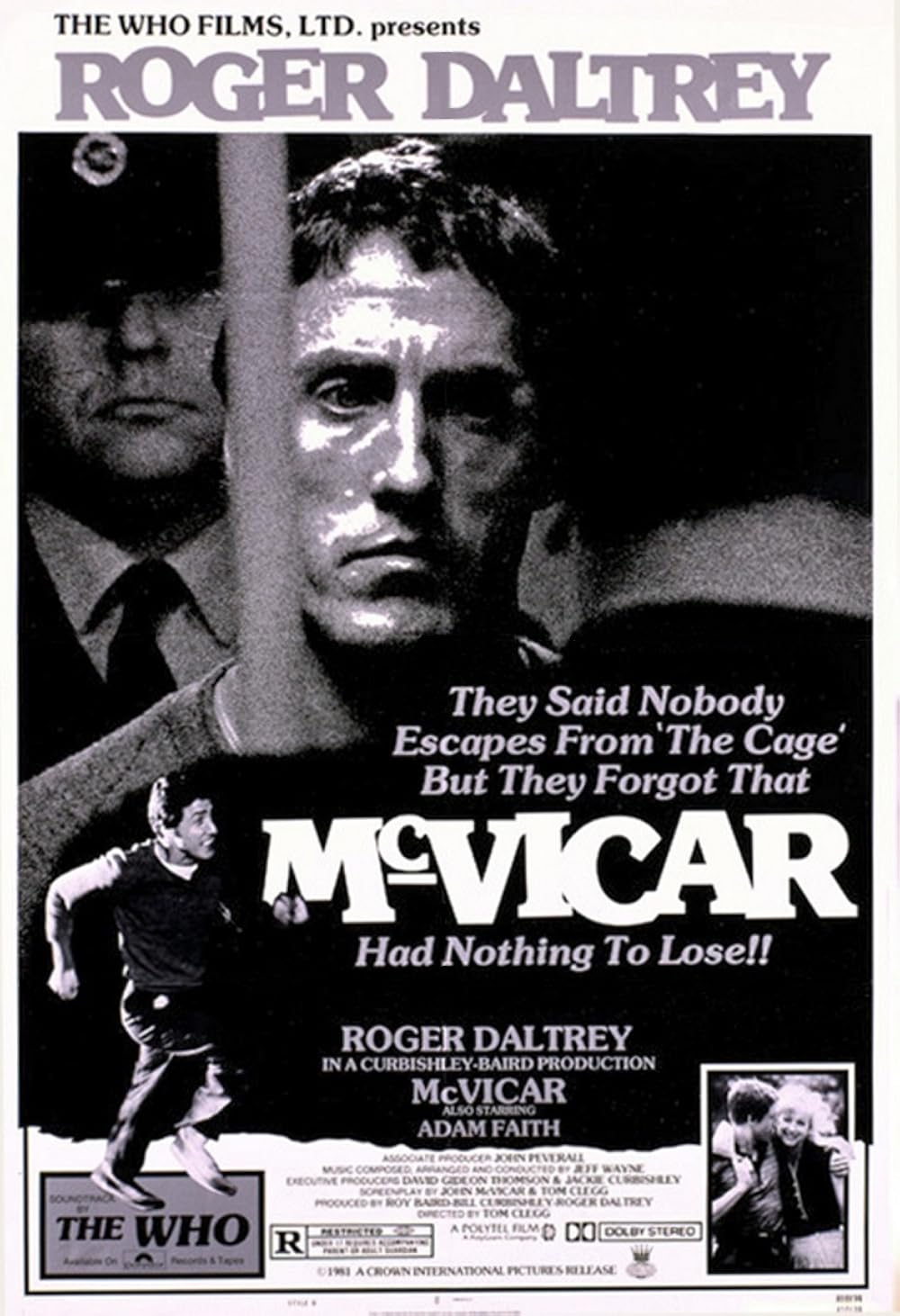
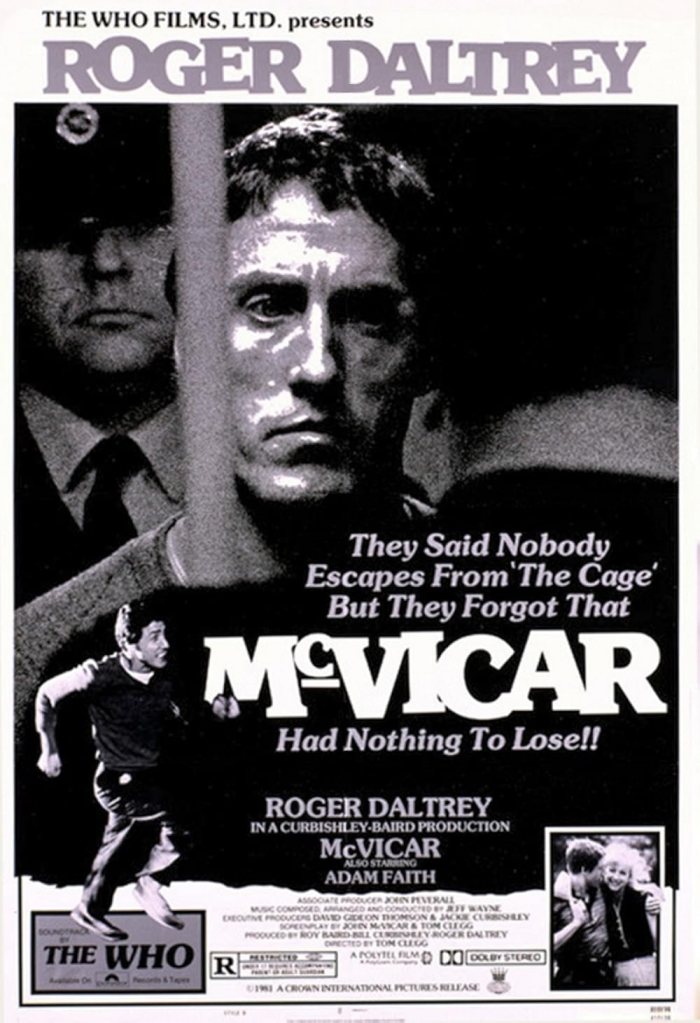
Few films capture the raw, uncompromising edge of British crime cinema quite like McVicar. Directed by Tom Clegg and starring Roger Daltrey of The Who fame, McVicar is based on the true story of John McVicar — a notorious London bank robber whose life spiraled through crime, prison, and eventual redemption. While it may not enjoy the same recognition as other British crime classics, McVicar deserves far more credit than it often receives. It’s an intelligent, authentic, and deeply human portrait of a man shaped by his environment yet ultimately determined to break free from it.
At its core, McVicar is a study of resilience. Roger Daltrey delivers one of the most compelling performances of his acting career, immersing himself completely in the role of a man both hardened by life and haunted by the choices he’s made. Daltrey’s natural charisma and simmering intensity make McVicar a complex and believable antihero — one who is neither glamorized nor vilified. His portrayal brings an emotional truth to the story that resonates long after the credits roll.
Director Tom Clegg, best known for his work on gritty British television dramas like The Sweeney, brings a documentary-like realism to the film. The stark cinematography and claustrophobic prison sequences feel almost tactile, evoking the damp, oppressive atmosphere of Britain’s penal system in the 1960s and ’70s. Clegg doesn’t rely on flashy direction or stylized violence; instead, he roots the story in authenticity and character. The film’s attention to detail — from its depiction of daily prison routines to the intricate planning of the escape — gives McVicar a grounded intensity that few films of its era match.
The supporting cast also deserves special mention. Adam Faith, as McVicar’s loyal accomplice, adds a vital sense of camaraderie and dark humor, while Cheryl Campbell’s performance as McVicar’s wife injects tenderness and emotional depth into an otherwise hard-edged narrative. Their relationships remind us that beneath the hardened exteriors, there are real people struggling for dignity and meaning in a brutal system.
The film’s soundtrack, largely composed and performed by Daltrey himself (with contributions from other members of The Who), is another standout feature. It perfectly complements the film’s tone — part gritty realism, part emotional catharsis. Songs like “Free Me” and “Without Your Love” enhance the emotional weight of the story, bridging the gap between rock music’s rebellious spirit and McVicar’s personal journey toward freedom.
What makes McVicar especially noteworthy today is its refusal to glorify crime. Instead, it offers a sobering yet sympathetic exploration of the forces that drive people toward desperate choices. It’s both a gripping prison drama and a character study, filled with moral ambiguity and emotional honesty.
More than four decades after its release, McVicar still feels relevant — a testament to its craftsmanship and heart. It stands as one of the most underrated British films of its time: tough, truthful, and surprisingly moving. For those who haven’t seen it, McVicar isn’t just a great crime film — it’s a story about survival, redemption, and the enduring human desire for freedom.
 BritishFilmNews.Com
Leave a comment