
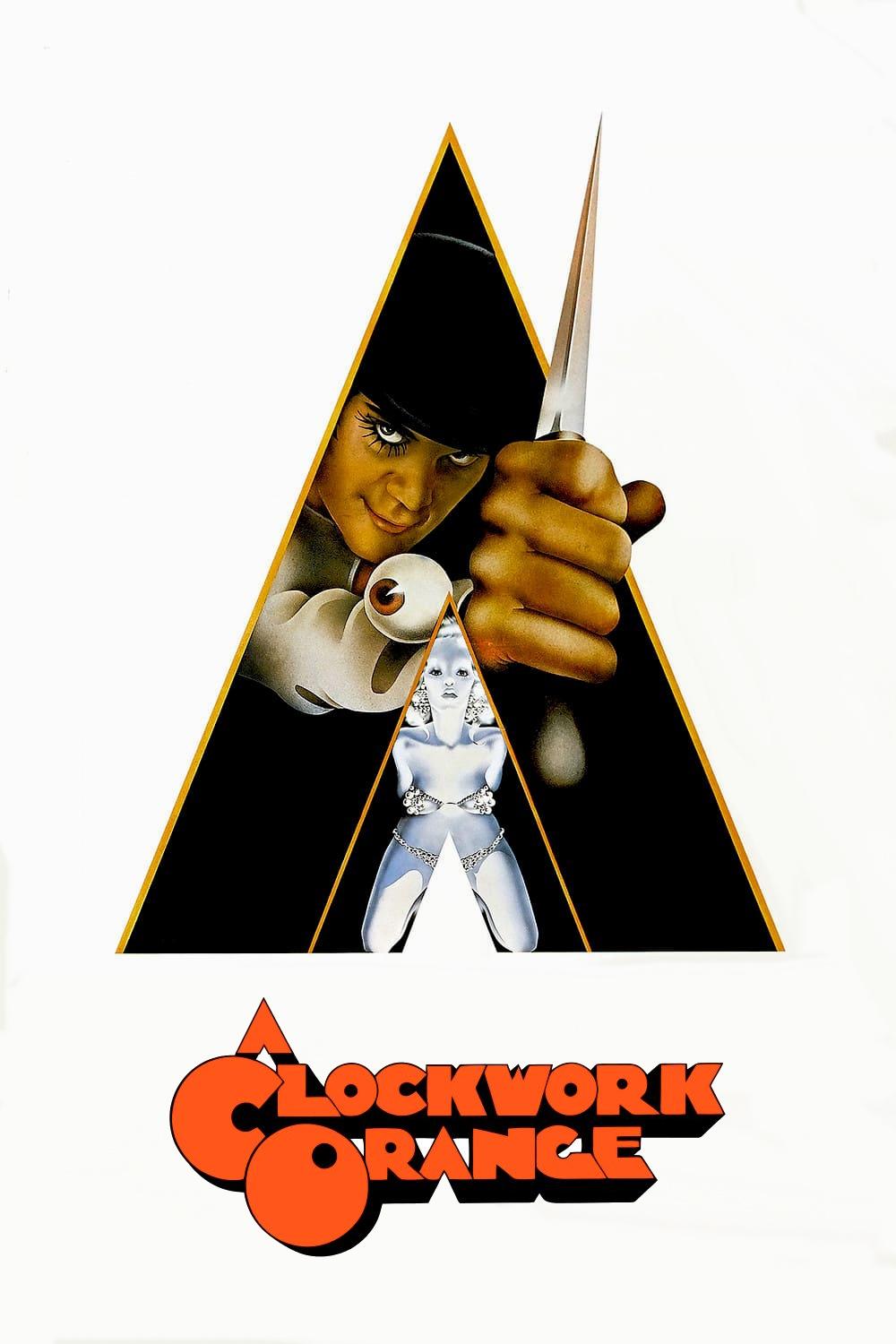
Stanley Kubrick’s A Clockwork Orange (1971) remains a daring and unforgettable masterpiece, a film that certainly pushes the boundaries of cinema both visually and thematically. Adapted from Anthony Burgess’s book, A Clockwork Orange tells the disturbing yet mesmerizing story of Alex DeLarge (played by Malcolm McDowell) , a charismatic anti-hero whose journey through violence, punishment, and attempted “rehabilitation” forces viewers to confront complex questions about morality, free will, and the nature of humanity itself.
Malcolm McDowell delivers a career-defining performance as Alex, embodying equal parts menace, wit, and eerie charm. Kubrick’s meticulous direction turns every frame into a visual feast: the bold, surreal set designs and striking use of color create an unsettling yet strangely beautiful dystopia. The film’s use of classical music, particularly Beethoven, serves as a brilliant counterpoint to its stark depictions of violence, amplifying its impact and making it all the more haunting.
More than five decades later, A Clockwork Orange feels as fresh, provocative, and relevant as ever. It challenges audiences to look deeper into questions of choice and control while leaving room for interpretation. Uncompromising and visionary, it stands as one of Kubrick’s finest achievements—a film that continues to provoke, disturb, and captivate those who dare to watch.

 BritishFilmNews.Com
Leave a comment